No todo depende de que tú puedas más.

Imagen: Pixabay

Hay momentos en los que creemos que,
si las cosas no mejoran,
es porque nos falta aguantar o «hacer» un poco más.

Ser más fuertes.
Más positiv@s.
Más alinead@s.
Más resilientes.

Pero hay una verdad incómoda y liberadora:

No todo depende de que tú puedas más.

A veces ya estás haciendo muchísimo:

Sosteniéndote sin romperte

Manteniendo la calma en medio del temporal

Cuidando tu energía para poder seguir creando

Eligiendo no colapsar

Hablando con honestidad para construir equipo

Avanzando, aunque el entorno esté denso

Eso ya es trabajo.
Eso ya es liderazgo.
Eso ya es agilidad con alma.

La agilidad no es exprimirte.
Es adaptarte sin perderte.

No siempre se trata de hacer más.
A veces se trata de dejar de cargar lo que no te corresponde
para poder seguir avanzando con claridad.

Porque sostenerte
también cuenta.

Y mucho.

PH1N1X


Image: Pixabay

Not everything depends on you being able to do more

There are moments when we believe that
if things aren’t improving,
it’s because we’re not pushing ourselves enough.

Being stronger.
More positive.
More aligned.
More resilient.

But there is an uncomfortable — and liberating — truth:

Not everything depends on you being able to do more.

Sometimes, you are already doing so much:

Holding yourself together without breaking

Staying calm in the middle of the storm

Protecting your energy so you can keep creating

Choosing not to collapse

Speaking honestly to build real teamwork

Moving forward, even when the environment feels heavy

That is work.
That is leadership.
That is agility with soul.

Agility is not about squeezing yourself dry.
It’s about adapting without losing yourself.

It’s not always about doing more.
Sometimes it’s about stopping carrying
what was never yours to hold
so you can keep moving forward with clarity.

Because sustaining yourself
also counts.

And a lot.

PH1N1X

Carta abierta a los recién egresad@s 2025

Imagen: Pixabay

Esta semana pensé en mis años como docente y sonreí: es temporada de graduaciones.
Cientos de estudiantes, de diferentes edades, carreras y ritmos universitarios, están concluyendo una etapa que marca para siempre. Y sí, inevitablemente recordé a mis exalumnos… y también a quienes están cruzando esta puerta hoy.

Por eso, esta carta es para ti, recién egresad@ de 2025.

La mejor respuesta que puedes recibir al empezar tu camino es un “NO”.

Sé que históricamente esta palabra se asocia con rechazo, puertas cerradas o lugares donde “no te valoraron”.
Pero cuando miras tu vida en retrospectiva, descubres otra verdad:
un NO es un regalo envuelto de forma inesperada.

En absoluto es una pared.
Tampoco es un fracaso.
Y mucho menos es un juicio sobre tu valor.

Es una señal de desviación.
Como esas flechas en las calles donde hay obras: no te detienen, solo te indican que sigas por otro camino para llegar a donde vas.

Y aquí está lo esencial:

Cuando inicias un camino profesional, lo más importante es tener claro tu destino.
La ruta, claro que importa… pero importa porque el camino también es parte del destino.
Es ahí donde aprenderás, crecerás, cambiarás y —sobre todo— te encontrarás contigo mism@.

Así que cuando llegue un “NO”, presta atención.
A veces redirige a una ruta más larga.
A veces abre una inesperadamente corta.
Pero siempre, siempre multiplica oportunidades que no habrías visto de otra forma.

Como recién egresad@, tu reto es aprender a distinguir:

el NO profesional

del NO personal

Y recordar quién eres mientras avanzas con seguridad.

En mi experiencia, cada NO me ha llevado a algo infinitamente mejor: clientes más alineados, proyectos más significativos, escenarios más grandes y/o a las personas correctas para mi camino. He aprendido a agradecer esos NO porque me confirman que existe una dirección más adecuada esperándome.

Ahora te toca a ti.

Estás por entrar a un 2026 lleno de sueños, ambición y energía.
Tal vez el lugar donde querías trabajar te diga que no…
O tal vez una agencia, un país o una persona lo hagan.

Pero recuerda:

Un NO a un sueño es solo la apertura a una versión más grande de ese mismo sueño.

Nada es permanente.
Todo es temporal.
Somos energía en movimiento —y eso no se detiene.

Ustedes no son “el futuro”.
Ustedes son el presente que está moldeando el mundo ahora.

Les deseo un camino lleno de claridad, enfoque y valentía.
Que disfruten cada paso hacia el destino que eligieron… y que lo hagan conscientes del impacto que están generando.

PH1N1X
Becoming Agile


Open Letter to the Class of 2025

Image: Pixabay

This week I thought about my years as a teacher, and I couldn’t help but smile: it’s graduation season.
Hundreds of students —across ages, degrees, and university rhythms— are closing a chapter that will mark them forever. And yes, I inevitably remembered my former students… and also those of you crossing this doorway today.

So this letter is for you, graduate of 2025.

The best answer you can receive as you begin your path is a “NO.”

Historically, this word has been associated with rejection, closed doors, or places where “you weren’t valued.”
But when you look back at your life, you discover another truth:
a NO is a gift wrapped in an unexpected way.

It is not a wall.
It is not a failure.
And it is certainly not a verdict on your worth.

It is a signal for redirection.
Like the signs on streets under construction —they don’t stop you; they simply guide you toward a different road that still leads you where you’re meant to go.

And here is what truly matters:

When you begin your professional journey, the most important thing is to be clear about your destination.
The route, of course, matters… but it matters because the journey itself is part of the destination.
It’s where you’ll learn, grow, evolve, and —above all— meet yourself.

So when a “NO” appears, pay attention.
Sometimes it redirects you to a longer path.
Sometimes it opens an unexpectedly short one.
But always, always, it multiplies possibilities you wouldn’t have noticed otherwise.

As a new graduate, your challenge is to learn to distinguish:

  • the professional NO
  • from the personal NO

And to remember who you are as you move forward with confidence.

In my experience, every NO has led me to something infinitely better: more aligned clients, more meaningful projects, bigger stages, and the right people for my path.
I’ve learned to be grateful for those NOs because they confirm that a more fitting direction is waiting for me.

Now it’s your turn.

You’re stepping into a 2026 filled with dreams, ambition, and energy.
Maybe the place you wanted to work will say no…
Or maybe an agency, a country, or a person will do it instead.

But remember:

A NO to a dream is simply the opening toward a larger version of that same dream.

Nothing is permanent.
Everything is temporary.
We are energy in motion —and that cannot be stopped.

You are not “the future.”
You are the present that is shaping the world right now.

I wish you a journey filled with clarity, focus, and courage.
May you enjoy every step toward the destination you’ve chosen —and may you remain aware of the impact your steps are creating.

PH1N1X
Becoming Agile

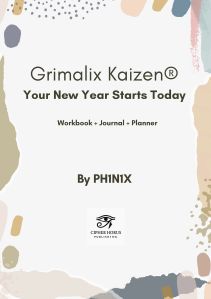
Lanzamiento oficial: Grimalix Kaizen — Tu año nuevo empieza hoy

Imagen: Cipher Horus Publ1sh1ng

Cuando el calendario «avanza» y se acerca «el fin de año», las emociones a veces son contradictorias…


Quizá una parte de ti piensa que esto ya se está terminando…
Mientras otra parte de ti se pregunta ¿por qué tan rápido? ¡hay mucho qué quiero hacer!
Tal vez empieza a invadirte la nostalgia y la sensación de ausencia…
O te sientes lleno de energía, con un boost difícil de explicar, como si ya hubieran pasado las celebraciones y estuvieras comenzando un nuevo camino, llen@ de ilusiones y planes.

Todas las emociones son válidas, correctas y aplicables.
Cada uno vivimos a un ritmo mental, espiritual y emocional distinto.
Así fue como nació el Grimalix Kaizen®
Porque la transformación no sucede en enero, al inicio del trimestre, ni cuando el calendario lo dictamina.
La verdadera transformación comienza cuando decides empezar.

Grimalix Kaizen® es más que un libro.
Es un mapa para regresar al tiempo propio.

¿Qué encontrarás dentro?

Un enfoque atemporal que te permite iniciar tu “año nuevo” cualquier día.

Un acompañamiento claro para soltar el deber ser, las fechas impuestas y el ritmo externo.

Un mapa Kaizen vivo que se adapta a tus ciclos, tu energía y tu capacidad real.

Una estructura diseñada para avanzar un paso a la vez, sin exigencias y con plena consciencia.

Herramientas suaves, honestas y aplicables para reconectar contigo, reordenar tu vida y moverte hacia lo que sí quieres.

Por qué Grimalix Kaizen® importa

Vivimos en una cultura que corre.
Pero correr no es avanzar.

Grimalix Kaizen® te ayuda a recuperar aire, espacio y dirección.
A celebrar fuera de temporada, a escucharte, y a construir un camino que te sostenga en lugar de drenarte.

Para quién es

Personas que sienten que nunca es “el momento adecuado”
O que «hoy, ahora mismo» es el momento perfecto,
Para quienes desean avanzar sin agotarse.

Creadores, líderes, estudiantes y profesionales que buscan claridad y enfoque.

Almas que quieren vivir desde un tiempo propio, no prestado

Tu año nuevo empieza hoy.


Y si estás listo para vivir en tiempo propio, Grimalix Kaizen® es tu entrada.
Disponible en Amazon y Amazon México
Formato: Tapa blanda


Official Launch: Grimalix Kaizen — Your new year starts today

Imagen: Cipher Horus Publ1sh1ng

As the calendar «turns on» and the end of the year approaches, emotions can sometimes be contradictory…

Perhaps part of you thinks it’s all coming to an end… While another part of you wonders, «Why so fast? There’s so much I want to do!»
Maybe nostalgia and a sense of absence begin to creep in… Or you feel full of energy, with a boost that’s hard to explain, as if the celebrations are over and you’re embarking on a new path, brimming with hopes and plans.

All emotions are valid, appropriate, and applicable.
We each live at a different mental, spiritual, and emotional pace.

This is how Grimalix Kaizen® was born.
Because transformation doesn’t happen in January, at the beginning of the quarter, or when the calendar dictates.

True transformation begins when you decide to start.

Grimalix Kaizen® is more than a book.

It’s a map to return to your own time.

What will you find inside?

A timeless approach that allows you to start your «new year» any day.

Clear guidance to let go of obligations, imposed deadlines, and external pressures.

A dynamic Kaizen roadmap that adapts to your cycles, your energy, and your actual capacity.

A structure designed to move forward one step at a time, without demands and with full awareness.

Gentle, honest, and applicable tools to reconnect with yourself, reorganize your life, and move toward what you truly want.

Why Grimalix Kaizen® Matters

We live in a fast-paced culture.

But rushing isn’t moving forward.

Grimalix Kaizen® helps you regain breath, space, and direction.
To celebrate out of season, to listen to yourself, and to build a path that sustains you instead of draining you.

Who It’s For

People who feel it’s never «the right time»

Or that «today, right now» is the perfect moment,
For those who want to move forward without burning out.

Creators, leaders, students, and professionals seeking clarity and focus.

Souls who want to live in their own time, not borrowed time.

Your new year starts today.

And if you’re ready to live in your own time, Grimalix Kaizen® is your gateway.

Available on Amazon
Format: Paperback

Del control a la confianza: cómo la visibilidad sana la ansiedad organizacional

Imagen: Pixabay

Una de las raíces más profundas del micromanagement no es la desconfianza ni el ego (aunque pueden manifestarse así), sino la falta de visibilidad.
Cuando alguien no tiene acceso a la información que necesita para tomar decisiones o rendir cuentas, su mente entra en modo “control”.
Y desde ahí, comienza el ciclo del agotamiento.

La mente necesita saber

En cualquier sistema —humano o corporativo—, la incertidumbre genera tensión.
Si no sabes en qué está tu equipo, qué se está moviendo o cómo va el avance de un proyecto clave, tu sistema nervioso entra en alerta.
Empiezas a llenar vacíos con suposiciones: “¿Estarán avanzando?” “¿Y si no llegamos a la fecha?” “¿Por qué nadie dice nada?”

Desde esa tensión, muchas personas se vuelven controladoras sin darse cuenta.
Piden más reportes, más juntas, más actualizaciones.
Pero en el fondo, lo que están pidiendo es tranquilidad.
Lo que necesitan no es controlar más, sino ver mejor.

La visibilidad no es vigilancia

Uno de los errores más comunes es confundir visibilidad con control.
La visibilidad no se trata de “supervisar cada paso”, sino de hacer visible el flujo de trabajo, los acuerdos y los resultados para que todos puedan sincronizarse sin fricción.

Cuando todos saben qué está pasando, el trabajo fluye.
Cuando solo unos pocos lo saben, se acumula la tensión.

Por eso, la visibilidad es una práctica de autocuidado organizacional.
Permite que la energía se distribuya de manera más justa: ya no hay unos pocos cargando con la presión de “dar la cara”, porque todos pueden contribuir a sostener la claridad colectiva.

Lo que el micromanagement revela

He visto a directores y gerentes estresarse simplemente porque no saben en qué están sus equipos.
No es que no confíen en ellos; es que ellos mismos viven bajo la presión de rendir cuentas cada semana o cada día.
Y cuando la visibilidad no existe, el micromanagement se convierte en su única herramienta de supervivencia.

El problema no es el control en sí, sino la causa que lo origina: el vacío informativo.
Ahí es donde la práctica ágil se vuelve medicina.

La visibilidad como puente de confianza

En Agile, se promueve la visibilidad no como un requisito técnico, sino como un acto de confianza y responsabilidad compartida.
No se trata de mostrar por obligación, sino de sostener al otro con información clara.
Porque cuando el otro sabe en qué estás, no necesita adivinarte.
Y cuando ya no necesita adivinarte, deja de presionarte.

Es un alivio mutuo.

He visto equipos transformarse cuando deciden abrir sus tableros, compartir avances, bloqueos, aprendizajes, incluso errores.
Esa transparencia no solo mejora el flujo de trabajo; restaura el tejido de confianza entre personas que antes operaban desde la sospecha o el miedo.

El trasfondo cultural

En muchas organizaciones, todavía pesa la idea de que la información es poder.
Que compartirla debilita la posición individual.
Pero en realidad, ocultarla fragmenta la energía colectiva.

Frases como “¿por qué le voy a decir todo?”, “que le cueste trabajo”, o “yo solo le reporto a mi jefe” reflejan una cultura basada en la separación.
Y donde hay separación, hay más control que colaboración.

La visibilidad desarma esa estructura.
No solo democratiza la información, sino que redistribuye la responsabilidad.
Deja de ser “tu problema” o “mi carga” para convertirse en nuestra claridad.

Cuando la visibilidad se convierte en calma

A veces creemos que la agilidad consiste en moverse más rápido.
Pero en realidad, el verdadero salto ocurre cuando aprendemos a movernos con calma y conciencia.
Y la calma llega cuando sabemos dónde estamos parados, qué está ocurriendo y hacia dónde vamos.
Eso es visibilidad.

Cuanta más visibilidad haya, menos necesidad de control existe.
Y cuando el control baja, la confianza puede florecer.
Ahí comienza la verdadera agilidad.


🔹 Becoming Agile no solo impulsa métodos, impulsa consciencia.
La visibilidad no es un tablero. Es un lenguaje de confianza.

PH1N1X


From Control to Trust: How Visibility Heals Organizational Anxiety

Image: Pixabay


One of the deepest roots of micromanagement isn’t distrust or ego (although they can manifest as such), but rather a lack of visibility. When someone doesn’t have access to the information they need to make decisions or be accountable, their mind goes into «control» mode. And from there, the cycle of burnout begins.

The Mind Needs to Know
In any system—human or corporate—uncertainty generates tension. If you don’t know what your team is working on, what’s happening, or how a key project is progressing, your nervous system goes on high alert. You start filling in the gaps with assumptions: «Are they making progress?» «What if we don’t meet the deadline?» «Why isn’t anyone saying anything?»
From this tension, many people unconsciously become controlling. They ask for more reports, more meetings, more updates. But deep down, what they’re asking for is peace of mind. What they need isn’t more control, but better visibility.

Visibility Isn’t Surveillance
One of the most common mistakes is confusing visibility with control. Visibility isn’t about «monitoring every step,» but about making workflows, agreements, and results visible so everyone can align seamlessly.

When everyone knows what’s happening, work flows. When only a few know, tension builds.
That’s why visibility is an organizational self-care practice. It allows energy to be distributed more fairly: no longer are a few burdened with the pressure of «being the center of attention,» because everyone can contribute to maintaining collective clarity.

What Micromanagement Reveals
I’ve seen directors and managers stressed simply because they don’t know what their teams are working on. It’s not that they don’t trust them; it’s that they themselves live under the pressure of being accountable every week or every day. And when visibility is lacking, micromanagement becomes their only survival tool.

The problem isn’t control itself, but the underlying cause: the information vacuum. That’s where agile practices become a remedy. Visibility as a Bridge of Trust
In Agile, visibility is promoted not as a technical requirement, but as an act of trust and shared responsibility. It’s not about showing information out of obligation, but about supporting others with clear information. Because when others know what you’re working on, they don’t need to guess. And when they no longer need to guess, they stop pressuring you.

It’s a mutual relief.

I’ve seen teams transform when they decide to open their boards, share progress, roadblocks, lessons learned, even mistakes. This transparency not only improves workflow; it restores the fabric of trust between people who previously operated from suspicion or fear.


The Cultural Background
In many organizations, the idea that information is power still holds sway. That sharing it weakens individual position. But in reality, hiding it fragments collective energy.
Phrases like «Why should I tell them everything?», «Let them work for it,» or «I only report to my boss» reflect a culture based on separation. And where there is separation, there is more control than collaboration.
Visibility dismantles that structure. It not only democratizes information, but also redistributes responsibility. It stops being “your problem” or “my burden” and becomes our clarity.

When visibility becomes calm
Sometimes we think agility is about moving faster. But in reality, the true leap happens when we learn to move with calm and awareness. And calm comes when we know where we stand, what’s happening, and where we’re going. That’s visibility.

The more visibility there is, the less need for control there is. And when control decreases, trust can flourish. That’s where true agility begins.

🔹 Becoming Agile doesn’t just drive methods, it drives awareness. Visibility isn’t a dashboard. It’s a language of trust.

PH1N1X
La claridad siempre llega

Imagen: Pixabay

A veces nos castigamos por no haber hecho algo antes.
Por no haber tomado una decisión, dado un paso, dicho una palabra.
Pero… ¿y si simplemente no era el momento?

Ni el tuyo, ni del contexto.

A veces lo único que necesitamos es tiempo.
Tiempo para que las piezas se acomoden, para que el ruido baje,
para que la mente deje de empujar y el alma pueda ver.

Y entonces llega: la claridad.
No como una “solución” inmediata, sino como un camino que se abre frente a ti.

Puede tomarte horas, días o semanas,
pero siempre llega.

Y cuando llega, solemos decir:


¡¿Por qué no me di cuenta antes?!

Es porque no era el momento.
Porque necesitabas pasar por el silencio,
por la pausa,
por la vida que ocurre mientras tanto.

La claridad no se busca, se recibe.
Y aparece cuando estás en calma.

Hoy, date la oportunidad avanzar con conciencia, no con prisa.

-PH1N1X-


Clarity Always Comes

Image: Pixabay

Sometimes we punish ourselves for not having done something sooner. For not having made a decision, taken a step, said a word. But… what if it simply wasn’t the right time?

Neither yours, nor the context’s.


Sometimes all we need is time. Time for the pieces to fall into place, for the noise to subside, for the mind to stop pushing and the soul to see.


And then it arrives: clarity. Not as an immediate “solution,” but as a path opening before you.


It may take hours, days, or weeks, but it always comes.


And when it arrives, we often say:

Why didn’t I realize it sooner?!

It’s because it wasn’t the right time. Because you needed to go through the silence, the pause, the life that unfolds in the meantime.

Clarity isn’t sought, it’s received. And it appears when you are calm.

Today, give yourself the opportunity to move forward with awareness, not with haste.

-PH1N1X-

Autogestión: una habilidad clave para el bienestar y los resultados

Imagen: Pixabay

Cuando hablo de la importancia de la autogestión con mis clientes, la mayoría de las veces, su mirada refleja incredulidad.
Es como si —por alguna razón— el concepto de autogestión no fuera compatible con sus equipos… aunque sea altamente deseable para la organización.

En mi experiencia, dos de cada tres colaboradores están abiertos y dispuestos a aprender a autogestionarse mejor de lo que ya lo hacen, en la medida en que la organización se los permite. Esa apertura y esa disposición son justo lo que vale la pena impulsar y fortalecer.

La habilidad de autogestionarse revela muchas cosas de las personas: capacidad de organización, claridad en el establecimiento de prioridades, evaluación de riesgos y necesidades… ¡y eso es valioso en cualquier equipo, sin importar la industria!

Y si la autogestión es poderosa en el ámbito laboral, lo es aún más cuando se implementa también en el cuidado de sí mism@s. En ese punto, la responsabilidad de la salud mental y física se comparte.

Quien aprende a autogestionarse, conoce sus límites físicos y mentales. Y al hacerlo, puede decir con claridad: “Me siento cansad@, es mejor que sigamos mañana”, en lugar de esperar a colapsar en plena oficina o enfermar por semanas.

Trabajar con personas que saben autogestionarse genera confianza: cuando aparece un warning, se sabe que es real y que merece atención. Y siempre será mejor prevenir que lamentar.

Así nació el Rally de Autogestión® ESLOWSBAN®.
Un modelo práctico para individuos y equipos que quieren aprender a autogestionarse y no saben cómo empezar. Durante seis días, con sesiones de 35 minutos al día, trabajamos paso a paso hasta culminar con un Quiz final que te da la posibilidad de obtener un certificado con número único de autenticidad emitido por Certify’em y respaldado por Becoming Agile®.


Self-management: a key skill for wellbeing and results

Image: Pixabay

When I talk to clients about the importance of self-management, most of the time their faces show disbelief.
It’s as if—for some reason—the concept of self-management were incompatible with their teams… even though it’s highly desirable for the organization.

In my experience, two out of three team members are open and willing to learn to self-manage better than they already do, to the extent the organization allows it. That openness and willingness are exactly what’s worth encouraging and strengthening.

The ability to self-manage says a lot about a person: capacity for organization, clarity in setting priorities, the ability to assess risks and needs…
—and that is valuable in every team, regardless of industry.

And if self-management is valuable at work, it’s even more powerful when people also apply it to self-care. In that moment, responsibility for employees’ mental and physical health is shared.

Those who learn to self-manage know their physical and mental limits. By doing so, they can tell their manager, “I’m feeling tired; it’s better if we continue tomorrow,” instead of waiting to collapse at the office or getting sick for weeks.

And those who work with people who know how to self-manage trust that any warnings that arise are real and deserve attention. They are early signals—and it’s always better to prevent than to regret.

That’s how the Rally de Autogestión® ESLOWSBAN® was born. It’s designed to support individuals and teams who want to learn how to self-manage and don’t know where to start. Over six days, with 35-minute daily sessions, we move step by step and finish with a final quiz that gives you the possibility of earning a certificate with a unique authenticity number issued by Certify’em and backed by Becoming Agile®.

Respira. Confía. Elígete.

Imagen: Pixabay

Uno de los momentos más difíciles que hay es elegirte a ti mism@. Porque nadie te enseña realmente cómo hacerlo.
Tus papás, abuelos, amigos, profesores o algunos jefes, te lo dicen “Valórate a ti mismo” pero en el día a día, ese consejo se va desgastando y está bien, es parte del crecimiento y el aprendizaje.

Y elegirte es más que una frase, es temblar de miedo porque no estás segur@ de lo que sigue y sin embargo, es decir “No, gracias” o elegir otro camino.

Con base en mi experiencia, hay dos razones por las que a veces pasamos por encima de nosotr@s mism@s: Por amor y por dinero.
¿Suena cruel?
Qué bueno, ¡porque ES cruel que nos hagamos eso a nosotr@s mism@s!

Por amor permitimos muchas pequeñas y medianas cosas y lo justificamos todo…

Y a nivel profesional no creas que hay mucha diferencia.
Aceptamos “cargos” que suenan estupendos con un salario muy bueno y que tienen muchas trampas ocultas como no haber horarios de oficina delimitados y una absurda obligación de estar disponible 24×7.
Aceptamos salarios que no corresponden con el valor de lo que hacemos.
Y aceptamos “lo que sea” porque “paga las cuentas”.

Sí, es verdad, las cuentas llegan cada mes y el alquiler, la comida, la luz y las tarjetas… todo requiere liquidez.
Pero no a costa de tu alma.
NUNCA a costa de tu alma.

Así que si sientes que te hierve la sangre por hacer cosas que no quieres o no te corresponden, no es orgullo mal entendido ni soberbia.
Es tu alma gritando.
Escúchala.

Yo sé, quizá en este momento no sabes qué sigue o cómo se va a resolver ese caos que hay en tu interior y a tu alrededor.
No te preocupes, solo respira. Respira hasta tranquilizarte.
Se resuelve.
Deja que la claridad llegue.
Y mírate a ti mism@ como lo que eres: Un ser sumamente valios@ que tiene mucho qué darle al mundo.
No dejes que nada ni nadie te convenza de lo contrario.
Confía en ti.
Confía en lo que sabes.
Confía en lo que haces.
Y confía en lo que creas, llámese Dios, Universo o un ser supremo.
Confía.

No estás sol@
Aunque a ratos lo parezca y llores de angustia…
No lo estás.

Así que elígete a ti mism@ con la frente en alto y sigue haciendo lo que te gusta, en lo que crees.
Porque eso que hoy llamas sueño, objetivo, deseo o ideal, es tu alma mostrándote el camino.
Y ella sabe.

Y si lo sabes, pero aún no sabes por dónde empezar… da el primer paso: escúchate, ordénate, respira.
Yo también he estado ahí. Y por eso estoy aquí, construyendo un ecosistema para que más personas aprendan a avanzar sin romperse.
Con agilidad, con alma, con sentido.

Lía Vicencio M. -PH1N1X- Escritora y creadora de sistemas y modelos | Autora de ESLOWSBAN® | Fundadora de Becoming Agile


Breathe. Trust. Choose yourself.

Image: Pixabay

One of the hardest things in life is choosing yourself.
Because no one really teaches you how to do it.
Your parents, grandparents, friends, teachers—or even some bosses—may say, “Value yourself,” but in everyday life, that advice fades. And that’s okay. It’s part of growth and learning.

But choosing yourself is more than a phrase.
It means trembling with fear because you don’t know what comes next—
and still saying, “No, thank you” or choosing a different path.

From my experience, there are two main reasons we override ourselves:
Love and money.
Does that sound harsh?
Good.
Because it IS harsh to do that to ourselves.

For love, we allow many small and medium-sized things and we justify them…

And in the professional world, it’s not so different.

We accept job titles that sound impressive and pay well,
but come with hidden traps like no defined work hours
and an absurd expectation to be available 24/7.

We accept salaries that don’t reflect the value of what we do.
And we accept “whatever comes along” because “it pays the bills.”

Yes, bills do come every month.
Rent, groceries, electricity, credit cards… liquidity matters.
But not at the cost of your soul.
NEVER at the cost of your soul.

So if your blood boils when you’re doing things you don’t want to do—or that aren’t yours to carry—
it’s not pride or arrogance.
It’s your soul screaming.
Listen to it.

I know.
Maybe right now you don’t know what comes next
or how the chaos inside and around you will be resolved.

Don’t worry.
Just breathe.
Breathe until you calm down.
It will work out.
Clarity will come.

And look at yourself for what you truly are:
a deeply valuable being with so much to give to this world.

Don’t let anything or anyone convince you otherwise.

Trust yourself.
Trust what you know.
Trust what you do.
And trust in what you believe in—whether you call it God, the Universe, or a higher force.
Trust.

You are not alone.
Even if sometimes it feels like you are.
Even if you cry in the dark from exhaustion and fear…
You are not alone.

So choose yourself. With your head held high.
And keep doing what you love, what you believe in.

Because what you call a dream, goal, desire, or vision
is your soul showing you the way.

And she knows.

And if you know it too, but still don’t know where to begin…
Take the first step: listen to yourself, get organized, breathe.
I’ve been there too.
And that’s why I’m here now—
building an ecosystem where more people can learn how to move forward without breaking.
With agility. With soul. With purpose.

Lía Vicencio M. – PH1N1X
Writer and systems creator | Author of ESLOWSBAN® | Founder of Becoming Agile

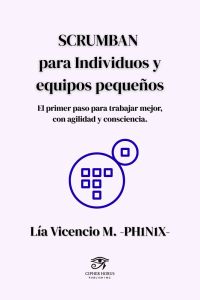
Ya está disponible: SCRUMBAN para individuos y equipos pequeños

Imagen: Cipher Horus Publ1sh1ng

Para mí, cada libro significa cosas distintas y responde a diversas necesidades que con el tiempo he ido detectando en los individuos, los equipos y las organizaciones a las que tengo y he tenido el gusto de ayudar a alinearse.

Y SCRUMBAN para Individuos y Equipos Pequeños es más que un libro, porque es una guía y un mapa visual para ordenar tu mente, avanzar sin prisa y trabajar con claridad.

Este libro lo escribí para todos aquellos que trabajan por su cuenta – como los miles de freelancers que hay – para quienes lideran un equipo pequeño desde una sala de juntas o una mesa de café y que son emprendedores, o que se dedican a las ventas, o que están montando su propia agencia, equipo creativo o de producción por ejemplo y también, para quienes forman parte de una empresa u organización mediana o grande, pero su área o departamento está conformado de pocas personas y están buscando algo que los ayude a encontrar cómo organizarse para trabajar mucho mejor.

Cualquiera que sea el rol que juegas ahora, este libro es para ti, porque te puede ayudar a utilizar una herramienta como SCRUMBAN de una forma muy sencilla y obtener así la visibilidad que necesitas para que tú y/o tu equipo trabajen más tranquilos.

En mi experiencia, tener visibilidad real de lo que estás haciendo, es la mejor manera de tener paz y trabajar con certeza.

Incluye ejercicios vivenciales, ejemplos de la vida real, una guía de implementación en 7 días y acceso a recursos descargables exclusivos.

Aquí empieza otro tipo de productividad.
Una más equilibrada.
Más sostenible.
Más clara.

Porque no hay nada mejor que la Agilidad Consciente y esa, es mi especialidad.

📘 Disponible en Amazon


Lía Vicencio M. -PH1N1X- Escritora y creadora de sistemas y modelos | Autora de ESLOWSBAN® | Fundadora de Becoming Agile

#BecomingAgile #SCRUMBAN #AgilidadConAlma #ProductividadConSentido #TrabajoConsciente

Recuerda quién eres.

Imagen: Pixabay

A veces, cuando nos preguntan “¿A qué te dedicas?”, la respuesta sale casi automática y he observado que en estas conversaciones, las respuestas suelen ir a dos extremos:

  • La que suena lo suficientemente compleja e importante como para impresionar.
  • O la que “menosprecia” la propia actividad, como si hubiera que justificarse o restarle valor.

No es casualidad: desde pequeños nos han enseñado a definirnos por lo que hacemos, no por lo que somos.

Sin embargo, en el fondo, ambas respuestas comparten algo: la necesidad de validar nuestra existencia a través de un título, un cargo, un proyecto o un rol.
Como si la vida fuera una competencia silenciosa donde cada uno trata de “ganar puntos” en el ranking de quién es más útil, más exitoso o más interesante.

Pero para mí, la vida no es eso.

Tu profesión, tu negocio, tu puesto en la empresa, tu papel en la familia o en tu comunidad… son  manifestaciones externas de algo mucho más profundo.
Son “trajes” que te pones para transitar ciertas experiencias, pero ninguno de ellos es tu piel real.

Porque yo creo que tú no eres tu trabajo.
Tú no eres tu rol social.
Tú no eres el papel que desempeñas para otros.

¡Eres mucho más que esos títulos!
Eres la conciencia que habita cada experiencia.
Eres el alma que decide las pautas, incluso antes de que llegues a la oficina, a una reunión, a dar una clase o a sentarte en la mesa familiar.

Cuando olvidas esto, empiezas a medir tu valor en función de métricas externas:

  • Cuánto ganas.
  • Qué tan importante es tu cargo.
  • Qué tan ocupada o productiva es tu agenda
  • Cuánto reconocen los demás lo que haces.

Y ahí empieza el desgaste. Porque si tu valor depende de “algo” que está fuera de ti, siempre estará en riesgo o parecerá “poco”.

En cambio, cuando recuerdas que tu esencia no está atada a ninguna etiqueta, algo cambia.
Tu trabajo deja de ser una jaula o un trofeo y se convierte en una herramienta para expresar quién eres.
Tu rol familiar deja de ser una obligación o una medalla y se transforma en un canal para dar y recibir amor y para compartir tu experiencia de la vida con los que te rodean. 

Tu presencia deja de ser un “puesto” y pasa a ser una energía que transforma los lugares donde estás y a las personas con las que colaboras.

Ser consciente de esto es un acto de libertad.
Es volver a poner el alma – tu alma- en el centro y dejar que lo demás orbite a su alrededor.La próxima vez que te pregunten “¿A qué te dedicas?” Anímate a responder desde tu alma.
No para explicar tu cargo o tu actividad, sino para honrar la verdad de quién eres, de tu propósito en esta vida y de lo que te mueve y te hace feliz.
Porque el día que dejas de definirte a partir de lo que haces, empiezas a vivir realmente desde quién eres.

Lía Vicencio M. -PH1N1X- Escritora y creadora de sistemas y modelos | Autora de ESLOWSBAN® | Fundadora de Becoming Agile


Remember Who You Are

Imagen: Pixabay

Sometimes, when people ask us, “What do you do?”, the answer comes out almost automatically. And I’ve noticed that, in these conversations, the answers often go to two extremes:

  • The one that sounds complex and important enough to impress.
  • Or the one that “downplays” the activity, as if trying to justify it or diminish its value.

It’s no coincidence: since childhood, we’ve been taught to define ourselves by what we do, not by who we are.

Yet deep down, both answers share something in common: the need to validate our existence through a title, a position, a project, or a role.
As if life were a silent competition where everyone is trying to “score points” in the ranking of who is more useful, more successful, or more interesting.

But to me, life isn’t that.

Your profession, your business, your job title, your role in the family or in your community… are external manifestations of something much deeper.
They are “costumes” you wear to go through certain experiences, but none of them is your real skin.

Because I believe you are not your job.
You are not your social role.
You are not the part you play for others.

You are so much more than those titles.
You are the awareness that inhabits every experience.
You are the soul that sets the tone—even before you walk into the office, step into a meeting, teach a class, or sit at the family table.

When you forget this, you start measuring your worth by external metrics:

  • How much you earn.
  • How important your position is.
  • How busy or productive your schedule is.
  • How much recognition you receive from others.

And that’s where the drain begins. Because if your worth depends on something outside of you, it will always be at risk—or feel “not enough.”

On the other hand, when you remember that your essence is not tied to any label, something changes.
Your work stops being a cage or a trophy and becomes a tool to express who you are.
Your family role stops being an obligation or a medal and becomes a channel to give and receive love, and to share your life experience with those around you.
Your presence stops being a “position” and becomes an energy that transforms the places you are in and the people you collaborate with.

Becoming aware of this is an act of freedom.
It’s putting the soul—your soul—back at the center, and letting everything else orbit around it.

The next time someone asks you, “What do you do?”, dare to answer from your soul.
Not to explain your title or your activity, but to honor the truth of who you are, your purpose in this life, and what moves you and makes you happy.

Because the day you stop defining yourself by what you do, you begin to truly live from who you are.

Lía Vicencio M. –PH1N1X– Writer and Creator of Systems and Models | Author of ESLOWSBAN® | Founder of Becoming Agile

Para ti, ¿qué significa “rendir”?

Imagen: Cipher, asistente creativo de Becoming Agile.

La primera pregunta que hago cuando hablo de ESLOWSBAN® es:
¿y si rendir no tuviera que doler…? Como duele.

Desde pequeños nos enseñan a evaluar “nuestro rendimiento”.
Lo aprendemos tan bien que dejamos de preguntarnos si esa definición es nuestra… o si alguna vez lo fue.

🔹 La palabra rendimiento nació del latín reddere: devolver, dar algo de vuelta.
No era un grito de guerra, ni una carga.
Era flujo. Movimiento natural.

En sus orígenes, hablaba de vida:

  • Agricultura (siglo XVI–XVIII): “Este año la tierra dio buen rendimiento de maíz.”
    (La tierra simplemente devuelve lo que recibe.)
  • Comercio: “Mi inversión en la caravana de especias tuvo buen rendimiento.”
    (Respuesta natural, no presión por producir más.)
  • Vida cotidiana: “El descanso rinde al espíritu y devuelve fuerza al cuerpo.”
    (Regeneración, no sobreexigencia.)

Con la revolución industrial (siglo XIX–XX) la palabra se distorsionó:

  • Fábricas: “El buen obrero demuestra su rendimiento al entregar más piezas en menos tiempo.”
  • Años 50: “El éxito de un empleado se mide por su rendimiento: horas extra y dedicación absoluta.”
  • Años 80: “Para mejorar el rendimiento, hay que incrementar la productividad y reducir los descansos.”

Hoy, incluso después de una pandemia, seguimos igual:

“Necesitamos optimizar procesos para que el rendimiento del equipo sea medible y sostenible, sin perder productividad.”

🔹 ¿A dónde voy con esto?
A que tu cuerpo lo siente.
Cada vez que escuchas “hay que rendir más”, tu sistema se contrae.
Rendir dejó de ser una respuesta natural y se volvió exigencia.

Con ESLOWSBAN®, abrimos otra puerta:
Dejamos de “rendir” para dar paso al SER.
Porque cuando cambias la palabra, cambias la emoción.
Cuando cambias la emoción, cambias la reacción de tu cuerpo.
Y cuando tu cuerpo deja de luchar, surge el verdadero rendimiento:
el que no rompe, sino sostiene.

¿No estás muy seguro de ello?
🙃 Inténtalo.
En mis cursos siempre les digo:
“Cambiemos la palabra problema por situación. ¿Cómo se sienten?”
En ese momento, las expresiones se suavizan.

Yo sonrío, porque es algo que llevo tiempo practicando y les pido:
“Ahora, cuando hablen con sus equipos y se presenten situaciones complejas, díganlo así: Tenemos esta situación.

Ayuden desde ese primer momento a que todos sus colaboradores reciban la información con apertura, sin miedo, sin estrés. Eso es lo que marca la diferencia en el tipo de respuestas o soluciones y, de manera natural, mejora el rendimiento… porque da paso al SER.

🌱 Semilla para hoy: Escucha cómo te hablas. Tu cuerpo ya te está respondiendo.

Lía Vicencio M. -PH1N1X- Escritora y creadora de sistemas y modelos | Autora de ESLOWSBAN® | Fundadora de Becoming Agile

#ESLOWSBAN® #AgilidadConAlma #PalabrasQueTransforman #BecomingAgile #PH1N1X


What does “performing” mean to you?

The first question I ask when I talk about ESLOWSBAN® is:
What if performing didn’t have to hurt… the way it does now?

From a young age, we’re taught to evaluate our “performance.”
We learn it so well that we stop asking if that definition is really ours… or if it ever was.

🔹 The word performance comes from the Latin reddere: to return, to give something back.
It wasn’t a battle cry, nor a burden.
It was flow. A natural movement.

In its origins, it spoke of life itself:

  • Agriculture (16th–18th century): “This year, the land gave a good yield of corn.”
    (The earth simply returned what it had received.)
  • Trade: “My investment in the spice caravan had a good return.”
    (A natural response, not pressure to produce more.)
  • Daily life: “Rest nourishes the spirit and returns strength to the body.”
    (Regeneration, not overexertion.)

With the Industrial Revolution (19th–20th century), the word was distorted:

  • Factories: “A good worker proves his performance by delivering more pieces in less time.”
  • 1950s: “An employee’s success is measured by performance: overtime hours and total dedication.”
  • 1980s: “To improve performance, we must increase productivity and cut down on breaks.”

Today, even after a global pandemic, we still move the same way:

“We need to optimize processes so the team’s performance can be fully measurable and sustainable, without losing productivity.”

🔹 Where am I going with this?
Your body feels it.
Every time you hear “we need to perform more,” your system tightens.
Performance stopped being a natural response and became a demand.

With ESLOWSBAN®, we open another door:
We stop “performing” and give way to BEING.
Because when you change the word, you change the emotion.
When you change the emotion, your body reacts differently.
And when your body stops fighting, true performance emerges—
the kind that doesn’t break you, but sustains you.

Not so sure about that?
🙃 Try it!
In my courses, I always say:
“Let’s change the word problem to situation. How does that feel?”
In that moment, faces soften.

I smile because it’s something I’ve practiced for a long time, and I ask them:
“Now, when you talk to your teams and complex situations arise, say it this way: We have this situation.”

From that first moment, you’re helping everyone receive the information openly—without fear, without stress. That’s what makes the difference in the kind of responses or solutions you’ll get and, naturally, improves performance… because it gives way to BEING.

🌱 Seed for today: Listen to how you talk to yourself. Your body is already responding.

Lía Vicencio M. -PH1N1X- Escritora y creadora de sistemas y modelos | Autora de ESLOWSBAN® | Fundadora de Becoming Agile

#ESLOWSBAN® #AgilityWithSoul #WordsThatTransform #BecomingAgile #PH1N1X

🔸 Mini Desafío | Una pausa para hoy

Imagen: Pixabay

👉 Recupera claridad interna en menos de 2 minutos.

¿Alguna vez has sentido que todo a tu alrededor “va muy aprisa? Como si todo y todos cambiaran y tú no… Como si todos supieran hacia dónde van ¡y tú no!

Se siente como si estuvieras congelad@ en el tiempo, sin moverte, sin avanzar… 😓

Normalmente sucede en medio de una fase de desempleo, en la prisa por hacer muchas cosas y/o los cambios de vida de quienes nos rodean.

Lo interesante es que eso que percibes como ir a otra velocidad, es un indicador de que estás enfocando el exterior, no lo importante: tu interno, a ti mism@.

Por eso se siente como ir fuera de ritmo.

Porque lo estás.

Y lo que es verdaderamente importante es tu ritmo, no “el de los demás”. No importa “cómo se vea” o “lo que parezca».

Lo que importa es cómo te sientes.
Así que te propongo un micro ejercicio que toma menos de 2 minutos
y puede ayudarte a recuperar foco, calma y claridad interna.


🌿 Micro Acción para hoy

1.Siéntate en silencio 60 segundos.
No hagas nada. Solo respira.

2. Coloca una mano en tu pecho o abdomen.
Siente tu respiración sin juzgarla.

3. Repite mentalmente:
“Yo soy valios@.
Pase lo que pase, soy valios@.
Estoy en pausa y desde aquí también me transformo.”

Eso es todo.
Hazlo una vez.
Y si lo necesitas, vuelve a hacerlo mañana.


🧠 ¿Por qué funciona?

Porque esta breve pausa reduce el cortisol (la hormona del estrés), activa tu sistema de calma (parasimpático) y te recuerda que vales incluso cuando no estás produciendo.
El cuerpo lo registra.
La mente lo siente.
El alma lo agradece.

Esa idea old fashioned de que “nuestro valor se mide por lo que hacemos” es obsoleta.

Esto es el siglo XXI y nuestro valor no se puede “establecer” con métricas del siglo XIX ni del siglo XX.  Es momento de entender -si es que alguien necesita medir algo- las nuevas métricas:  Cualitativas.

Así se entrena también la agilidad: aprendiendo a mirar hacia dentro.

Respira profundo y mírate al espejo con orgullo.

Eres valios@

No importa lo que “la mente o el sistema” te digan.

Lo que importa, es lo que tú crees de ti mism@

Lía Vicencio M. -PH1N1X- Escritora y creadora de sistemas y modelos | Autora de ESLOWSBAN® | Fundadora de Becoming Agile

#PausaProductiva #ClaridadInterna #BecomingAgile
#YoSoyYEsoBasta #ESLOWSBAN #CuidadoProfesional


🔸 Mini Challenge | A Pause for Today

👉 Regain Inner Clarity in Under 2 Minutes.

Have you ever felt like everything around you is moving too fast?
As if everyone and everything is changing—and you’re not…
As if everyone knows where they’re headed—and you don’t!

It feels like you’re frozen in time, stuck, unable to move forward… 😓

This usually happens during a period of unemployment, when rushing to do too many things, or when the people around us are going through big life changes.

What’s interesting is that this feeling of being “out of sync” is actually a sign:
You’re focusing on the outside world instead of what truly matters—your inner world, yourself.

That’s why it feels offbeat.

Because you are.

And what truly matters is your rhythm—not everyone else’s.
It doesn’t matter how it “looks” or what it “seems like.”

What matters is how you feel.
So here’s a micro-exercise that takes less than 2 minutes and can help you regain focus, calm, and inner clarity.


🌿 Micro Action for Today

  1. Sit in silence for 60 seconds.
    Don’t do anything. Just breathe.
  2. Place one hand on your chest or abdomen. Feel your breath—without judgment.
  3. Repeat silently in your mind: “I am valuable. No matter what happens, I am valuable. I’m in pause, and from here, I transform too.”

That’s it.
Do it once.
And if you need to, do it again tomorrow.


🧠 Why Does It Work?

Because this brief pause lowers cortisol (the stress hormone), activates your calming system (the parasympathetic nervous system), and reminds you that you are worthy—even when you’re not “producing.”
Your body registers it.
Your mind feels it.
Your soul is grateful.

That old-fashioned idea that “our worth is based on what we do” is outdated.

This is the 21st century—and our value can’t be “measured” with 19th- or 20th-century metrics.
If anything needs to be measured, it’s time we shift toward new metrics: qualitative ones.

This is how agility is trained too: by learning to look within.

Take a deep breath and look in the mirror with pride.

You are valuable.

No matter what “the system” or your mind might say—
what truly matters is what you believe about yourself.

Lía Vicencio M. -PH1N1X- Escritora y creadora de sistemas y modelos | Autora de ESLOWSBAN® | Fundadora de Becoming Agile

#ProductivePause #InnerClarity #BecomingAgile
#IAmAndThatIsEnough #ESLOWSBAN #ProfessionalCare