¿Estás a tu favor… o en tu contra?

No necesitas que nada ni nadie te valide.
Necesitas validarte tú.

Elegirte cada día es eso.
Elegir lo que quieres hacer.
Elegir lo que crees.
Elegir lo que te gusta.

Y, sobre todo, elegir y abrazar el potencial que ves en tu futuro, incluso cuando nadie más lo ve.
Porque cada vez que eliges tu camino, te eliges a ti.

Tu valor no depende de likes, de un salario mensual, de followers o de comentarios.
Eso es reconocimiento externo.

Pero tú…
¿te reconoces?

¿Sabes quién eres debajo de cada título, diplomado, curso o rol profesional?
¿Quién eres cuando no hay aplausos, métricas ni etiquetas?

Tu valor depende de ti.
De lo que piensas, de lo que sientes, de lo que dices y de lo que haces.
En armonía.
Con congruencia.
Alineado contigo.

El respaldo más importante que necesitas es el tuyo.
Creer en ti.
Confiar en ti.
Ser paciente contigo.
Reconocer tus logros y tus aprendizajes.
Cuidarte física, mental y emocionalmente.

Y cuando no lo haces, te estás traicionando.
Porque la única persona con la que cuentas de forma incondicional, 24x7x365,
eres tú.

Así que la pregunta es sencilla.
Hoy.
Donde estás.
Con lo que estás haciendo…

¿Estás jugando a tu favor… o en tu contra?

PH1N1X


Are you on your side… or against yourself?

You don’t need anything or anyone to validate you.
You need to validate yourself.

Choosing yourself every day is exactly that.
Choosing what you want to do.
Choosing what you believe.
Choosing what you like.

And above all, choosing and embracing the potential you see in your future, even when no one else can see it.
Because every time you choose your path, you choose yourself.

Your value does not depend on likes, a monthly salary, followers, or comments.
That is external recognition.

But you…
do you recognize yourself?

Do you know who you are beneath every title, certification, course, or professional role?
Who are you when there is no applause, no metrics, no labels?

Your value depends on you.
On what you think, what you feel, what you say, and what you do.
In harmony.
With coherence.
Aligned with yourself.

The most important support you need is your own.
Believing in yourself.
Trusting yourself.
Being patient with yourself.
Recognizing your achievements and your learnings.
Taking care of yourself physically, mentally, and emotionally.

And when you don’t, you are betraying yourself.
Because the only person you can count on unconditionally, 24x7x365,
is you.

So the question is simple.
Today.
Where you are.
With what you are doing…

Are you playing in your favor… or against yourself?

PH1N1X

Reconocer el apoyo: el verdadero punto de partida

Imagen: Pixabay

El apoyo tiene muchas formas de hacerse presente.
No siempre llega como aplausos, likes o grandes gestos visibles.
A veces llega como tiempo.
O como paciencia.
O como alguien que sostiene mientras tú avanzas.

En los equipos —y en la vida— el problema no suele ser la falta de apoyo.
Suele ser la incapacidad de reconocerlo.

El pensamiento humano promedio, en modo automático, opera como rueda de hámster:
Solo ve lo que falta.
No hay suficiente dinero.
No hay oportunidades.
No hay trabajo.
No hay tiempo.

Desde ahí, todo se vive como carencia… incluso cuando hay colaboración constante alrededor.

No se ve el apoyo de la pareja que sostiene económicamente mientras el otro redefine su camino.
No se ve el apoyo del compañero que cubre una tarea para que alguien más pueda ir a una entrevista.
No se ve el apoyo de quien cuida, gestiona, espera o confía.

Y sin embargo, ese sí es el trabajo en equipo.

Reconocer el apoyo no es un gesto emocional.
Es una habilidad operativa.

Cuando reconoces el apoyo:

  • dejas de sentirte solo,
  • tomas mejores decisiones,
  • avanzas con menos fricción,
  • y puedes evaluar con claridad si continuar, ajustar o cambiar el rumbo.

Vivimos en un mundo de colaboración permanente, aunque no siempre consciente.
La tecnología nos apoya.
La infraestructura nos apoya.
Las personas nos apoyan, incluso sin discursos épicos.

Pero hay un punto clave que casi nadie mira:

Así como otros ven lo mejor de ti y te apoyan desde ahí,
también es tu responsabilidad reconocerte y apoyarte a ti mismo.

La agilidad real no empieza cuando haces más.
Empieza cuando ves con claridad lo que ya está sosteniéndote.

Y desde ahí… decides mejor.

PH1N1X


Recognizing support: the true starting point

Image: Pixabay

Support takes many forms.

It doesn’t always come as applause, likes, or grand, visible gestures.

Sometimes it comes as time.

Or as patience.

Or as someone who holds your back while you move forward.

In teams—and in life—the problem isn’t usually a lack of support.
It’s usually the inability to recognize it.

The average person, on autopilot, operates like a hamster wheel: It only sees what’s missing.
Not enough money.
No opportunities.
No work.
No time.

From that perspective, everything is experienced as lacking… even when there’s constant collaboration around.

You don’t see the support of the partner who provides financial support while the other redefines their path.
You don’t see the support of the colleague who covers a task so someone else can go to an interview.
You don’t see the support of the person who cares, manages, waits, or trusts.

And yet, that is what teamwork truly is.

Recognizing support isn’t an emotional gesture.

It’s an operational skill.

When you recognize support:

you stop feeling alone,

you make better decisions,

you move forward with less friction,

and you can clearly assess whether to continue, adjust, or change course.

We live in a world of constant, though not always conscious, collaboration.

Technology supports us.
Infrastructure supports us.
People support us, even without grand pronouncements.

But there’s a key point that almost no one considers:

Just as others see the best in you and support you from that place,
it’s also your responsibility to recognize and support yourself.

True agility doesn’t begin when you do more.

It begins when you clearly see what’s already supporting you.

And from there… you make better decisions.

PH1N1X

No todo depende de que tú puedas más.

Imagen: Pixabay

Hay momentos en los que creemos que,
si las cosas no mejoran,
es porque nos falta aguantar o «hacer» un poco más.

Ser más fuertes.
Más positiv@s.
Más alinead@s.
Más resilientes.

Pero hay una verdad incómoda y liberadora:

No todo depende de que tú puedas más.

A veces ya estás haciendo muchísimo:

Sosteniéndote sin romperte

Manteniendo la calma en medio del temporal

Cuidando tu energía para poder seguir creando

Eligiendo no colapsar

Hablando con honestidad para construir equipo

Avanzando, aunque el entorno esté denso

Eso ya es trabajo.
Eso ya es liderazgo.
Eso ya es agilidad con alma.

La agilidad no es exprimirte.
Es adaptarte sin perderte.

No siempre se trata de hacer más.
A veces se trata de dejar de cargar lo que no te corresponde
para poder seguir avanzando con claridad.

Porque sostenerte
también cuenta.

Y mucho.

PH1N1X


Image: Pixabay

Not everything depends on you being able to do more

There are moments when we believe that
if things aren’t improving,
it’s because we’re not pushing ourselves enough.

Being stronger.
More positive.
More aligned.
More resilient.

But there is an uncomfortable — and liberating — truth:

Not everything depends on you being able to do more.

Sometimes, you are already doing so much:

Holding yourself together without breaking

Staying calm in the middle of the storm

Protecting your energy so you can keep creating

Choosing not to collapse

Speaking honestly to build real teamwork

Moving forward, even when the environment feels heavy

That is work.
That is leadership.
That is agility with soul.

Agility is not about squeezing yourself dry.
It’s about adapting without losing yourself.

It’s not always about doing more.
Sometimes it’s about stopping carrying
what was never yours to hold
so you can keep moving forward with clarity.

Because sustaining yourself
also counts.

And a lot.

PH1N1X

Del control a la confianza: cómo la visibilidad sana la ansiedad organizacional

Imagen: Pixabay

Una de las raíces más profundas del micromanagement no es la desconfianza ni el ego (aunque pueden manifestarse así), sino la falta de visibilidad.
Cuando alguien no tiene acceso a la información que necesita para tomar decisiones o rendir cuentas, su mente entra en modo “control”.
Y desde ahí, comienza el ciclo del agotamiento.

La mente necesita saber

En cualquier sistema —humano o corporativo—, la incertidumbre genera tensión.
Si no sabes en qué está tu equipo, qué se está moviendo o cómo va el avance de un proyecto clave, tu sistema nervioso entra en alerta.
Empiezas a llenar vacíos con suposiciones: “¿Estarán avanzando?” “¿Y si no llegamos a la fecha?” “¿Por qué nadie dice nada?”

Desde esa tensión, muchas personas se vuelven controladoras sin darse cuenta.
Piden más reportes, más juntas, más actualizaciones.
Pero en el fondo, lo que están pidiendo es tranquilidad.
Lo que necesitan no es controlar más, sino ver mejor.

La visibilidad no es vigilancia

Uno de los errores más comunes es confundir visibilidad con control.
La visibilidad no se trata de “supervisar cada paso”, sino de hacer visible el flujo de trabajo, los acuerdos y los resultados para que todos puedan sincronizarse sin fricción.

Cuando todos saben qué está pasando, el trabajo fluye.
Cuando solo unos pocos lo saben, se acumula la tensión.

Por eso, la visibilidad es una práctica de autocuidado organizacional.
Permite que la energía se distribuya de manera más justa: ya no hay unos pocos cargando con la presión de “dar la cara”, porque todos pueden contribuir a sostener la claridad colectiva.

Lo que el micromanagement revela

He visto a directores y gerentes estresarse simplemente porque no saben en qué están sus equipos.
No es que no confíen en ellos; es que ellos mismos viven bajo la presión de rendir cuentas cada semana o cada día.
Y cuando la visibilidad no existe, el micromanagement se convierte en su única herramienta de supervivencia.

El problema no es el control en sí, sino la causa que lo origina: el vacío informativo.
Ahí es donde la práctica ágil se vuelve medicina.

La visibilidad como puente de confianza

En Agile, se promueve la visibilidad no como un requisito técnico, sino como un acto de confianza y responsabilidad compartida.
No se trata de mostrar por obligación, sino de sostener al otro con información clara.
Porque cuando el otro sabe en qué estás, no necesita adivinarte.
Y cuando ya no necesita adivinarte, deja de presionarte.

Es un alivio mutuo.

He visto equipos transformarse cuando deciden abrir sus tableros, compartir avances, bloqueos, aprendizajes, incluso errores.
Esa transparencia no solo mejora el flujo de trabajo; restaura el tejido de confianza entre personas que antes operaban desde la sospecha o el miedo.

El trasfondo cultural

En muchas organizaciones, todavía pesa la idea de que la información es poder.
Que compartirla debilita la posición individual.
Pero en realidad, ocultarla fragmenta la energía colectiva.

Frases como “¿por qué le voy a decir todo?”, “que le cueste trabajo”, o “yo solo le reporto a mi jefe” reflejan una cultura basada en la separación.
Y donde hay separación, hay más control que colaboración.

La visibilidad desarma esa estructura.
No solo democratiza la información, sino que redistribuye la responsabilidad.
Deja de ser “tu problema” o “mi carga” para convertirse en nuestra claridad.

Cuando la visibilidad se convierte en calma

A veces creemos que la agilidad consiste en moverse más rápido.
Pero en realidad, el verdadero salto ocurre cuando aprendemos a movernos con calma y conciencia.
Y la calma llega cuando sabemos dónde estamos parados, qué está ocurriendo y hacia dónde vamos.
Eso es visibilidad.

Cuanta más visibilidad haya, menos necesidad de control existe.
Y cuando el control baja, la confianza puede florecer.
Ahí comienza la verdadera agilidad.


🔹 Becoming Agile no solo impulsa métodos, impulsa consciencia.
La visibilidad no es un tablero. Es un lenguaje de confianza.

PH1N1X


From Control to Trust: How Visibility Heals Organizational Anxiety

Image: Pixabay


One of the deepest roots of micromanagement isn’t distrust or ego (although they can manifest as such), but rather a lack of visibility. When someone doesn’t have access to the information they need to make decisions or be accountable, their mind goes into «control» mode. And from there, the cycle of burnout begins.

The Mind Needs to Know
In any system—human or corporate—uncertainty generates tension. If you don’t know what your team is working on, what’s happening, or how a key project is progressing, your nervous system goes on high alert. You start filling in the gaps with assumptions: «Are they making progress?» «What if we don’t meet the deadline?» «Why isn’t anyone saying anything?»
From this tension, many people unconsciously become controlling. They ask for more reports, more meetings, more updates. But deep down, what they’re asking for is peace of mind. What they need isn’t more control, but better visibility.

Visibility Isn’t Surveillance
One of the most common mistakes is confusing visibility with control. Visibility isn’t about «monitoring every step,» but about making workflows, agreements, and results visible so everyone can align seamlessly.

When everyone knows what’s happening, work flows. When only a few know, tension builds.
That’s why visibility is an organizational self-care practice. It allows energy to be distributed more fairly: no longer are a few burdened with the pressure of «being the center of attention,» because everyone can contribute to maintaining collective clarity.

What Micromanagement Reveals
I’ve seen directors and managers stressed simply because they don’t know what their teams are working on. It’s not that they don’t trust them; it’s that they themselves live under the pressure of being accountable every week or every day. And when visibility is lacking, micromanagement becomes their only survival tool.

The problem isn’t control itself, but the underlying cause: the information vacuum. That’s where agile practices become a remedy. Visibility as a Bridge of Trust
In Agile, visibility is promoted not as a technical requirement, but as an act of trust and shared responsibility. It’s not about showing information out of obligation, but about supporting others with clear information. Because when others know what you’re working on, they don’t need to guess. And when they no longer need to guess, they stop pressuring you.

It’s a mutual relief.

I’ve seen teams transform when they decide to open their boards, share progress, roadblocks, lessons learned, even mistakes. This transparency not only improves workflow; it restores the fabric of trust between people who previously operated from suspicion or fear.


The Cultural Background
In many organizations, the idea that information is power still holds sway. That sharing it weakens individual position. But in reality, hiding it fragments collective energy.
Phrases like «Why should I tell them everything?», «Let them work for it,» or «I only report to my boss» reflect a culture based on separation. And where there is separation, there is more control than collaboration.
Visibility dismantles that structure. It not only democratizes information, but also redistributes responsibility. It stops being “your problem” or “my burden” and becomes our clarity.

When visibility becomes calm
Sometimes we think agility is about moving faster. But in reality, the true leap happens when we learn to move with calm and awareness. And calm comes when we know where we stand, what’s happening, and where we’re going. That’s visibility.

The more visibility there is, the less need for control there is. And when control decreases, trust can flourish. That’s where true agility begins.

🔹 Becoming Agile doesn’t just drive methods, it drives awareness. Visibility isn’t a dashboard. It’s a language of trust.

PH1N1X

La claridad siempre llega

Imagen: Pixabay

A veces nos castigamos por no haber hecho algo antes.
Por no haber tomado una decisión, dado un paso, dicho una palabra.
Pero… ¿y si simplemente no era el momento?

Ni el tuyo, ni del contexto.

A veces lo único que necesitamos es tiempo.
Tiempo para que las piezas se acomoden, para que el ruido baje,
para que la mente deje de empujar y el alma pueda ver.

Y entonces llega: la claridad.
No como una “solución” inmediata, sino como un camino que se abre frente a ti.

Puede tomarte horas, días o semanas,
pero siempre llega.

Y cuando llega, solemos decir:


¡¿Por qué no me di cuenta antes?!

Es porque no era el momento.
Porque necesitabas pasar por el silencio,
por la pausa,
por la vida que ocurre mientras tanto.

La claridad no se busca, se recibe.
Y aparece cuando estás en calma.

Hoy, date la oportunidad avanzar con conciencia, no con prisa.

-PH1N1X-


Clarity Always Comes

Image: Pixabay

Sometimes we punish ourselves for not having done something sooner. For not having made a decision, taken a step, said a word. But… what if it simply wasn’t the right time?

Neither yours, nor the context’s.


Sometimes all we need is time. Time for the pieces to fall into place, for the noise to subside, for the mind to stop pushing and the soul to see.


And then it arrives: clarity. Not as an immediate “solution,” but as a path opening before you.


It may take hours, days, or weeks, but it always comes.


And when it arrives, we often say:

Why didn’t I realize it sooner?!

It’s because it wasn’t the right time. Because you needed to go through the silence, the pause, the life that unfolds in the meantime.

Clarity isn’t sought, it’s received. And it appears when you are calm.

Today, give yourself the opportunity to move forward with awareness, not with haste.

-PH1N1X-

¿Qué es lo más difícil que te ha tocado enfrentar en la vida?

Hace poco, alguien me hizo exactamente esta pregunta.

Y me quedé pensando…

Por mi mente cruzaron diferentes momentos y situaciones de mi vida y sin embargo, llegué a esta conclusión:

Creo que una de las cosas más difíciles a las que me he enfrentado en la vida ha sido a mí misma.

Aprender a escucharme, a cuidarme, a respetarme y a ser considerada conmigo misma fue un proceso largo.

Hoy en día es mucho más sencillo, pero no siempre fue así.

Desde la escuela, me había acostumbrado “a dar mi 100%” y me sentía orgullosa de exigirme el 200% si era necesario.

Y ese 200% fue en ascenso conforme fui trabajando y creciendo profesionalmente.

Dormir poco o nada era normal para mí. 

Hubo un tiempo en el que daba clases de 7:00am a 9:00am, llegaba corriendo a la agencia de publicidad en la que trabajaba a las 9.30am y salía corriendo -con suerte- a las 7:00pm para entrar al posgrado y salir de ahí a las 10:00pm para llegar a casa a cenar cualquier cosa, calificar a mis alumnos o preparar clase y después, dormir «algo».

Recuerdo que a veces iba al baño en la agencia, solo para poder dormir 5 minutos. Estaba exhausta y orgullosa. ¡Ja!

Cumplía con los estándares de productividad y compromiso  que había aprendido y que también me pedían en todos lados: como docente, como copy en la agencia y como estudiante de posgrado.

Hasta que colapsé y eso me mandó a la cama dos años y medio.

Y en esos dos años y medio, aprendí más de mí misma y de lo que quería, que en toda mi carrera.

Sin duda a partir de esos dos años fue cuando empecé a buscar ideas – o semillas, como yo las llamo – que me ayudaran a diseñar una nueva vida, una nueva estructura.

Y las encontré. 

Descubrí que no “tengo que” nada. Porque siempre tengo elección.

Aunque no lo parezca en ese momento.

Aunque se vea abrumador, gigante, imposible o irreal «porque nadie lo hace de esa manera»… yo tengo elección y  soy yo quien decide si quiero o no hacer algo.

Aprendí que es mucho mejor para mí, tomarme un día de descanso que pedirle a mi organismo más de lo que puede dar. 

Porque ese día de descanso es de reset y si lo ignoro, puede que no tenga una tercera oportunidad. Porque en este momento estoy viviendo literalmente my second chance.

Y en el camino de mi aprendizaje, también descubrí mi propósito: Ayudar a las personas a encontrar otra forma de trabajar, otra manera de abordar las responsabilidades del día a día. 

Con pausas

En slow

Cuidando de sí mism@s, porque son lo más valioso que tienen.

Por eso escribo, por eso diseño estructuras, sistemas, metodologías… 

Porque con cada una yo también me recuerdo a mí misma lo que es verdaderamente importante y valioso: mi vida.

Y hoy escribo esto para recordarme —y recordarte— que no “tenemos que” nada. 

Siempre hay elección.

PH1N1X – Lía VM –


What’s the hardest thing you’ve ever had to face in life?

Someone recently asked me exactly this question.

And I was left wondering…

Different moments and situations in my life flashed through my mind, and yet I came to this conclusion:

I think one of the hardest things I’ve ever faced in life has been myself.

Learning to listen to myself, take care of myself, respect myself, and be considerate of myself was a long process.

It’s much easier today, but it wasn’t always this way.

Since I was in high school, I had gotten used to «giving 100%» and I prided myself on pushing myself to 200% if necessary.

And that 200% increased as I worked and grew professionally.

Sleeping little or not at all was normal for me.

There was a time when I taught classes from 7:00 a.m. to 9:00 a.m. I would rush to the advertising agency where I worked at 9:30 a.m. and rush out (if I was lucky) at 7:00 p.m. to get to graduate school and leave by 10:00 p.m. to get home to grab some dinner, grade my students, or prepare for class, and then get some sleep.

I remember sometimes going to the bathroom at the agency just to get a 5-minute sleep. I was exhausted and proud. Ha!

I met the productivity and commitment standards I had learned and that were also required of me everywhere: as a teacher, as a copywriter at the agency, and as a graduate student.

Until I collapsed, and that sent me to bed for two and a half years.

And in those two and a half years, I learned more about myself and what I wanted than in my entire career.

Without a doubt, it was from those two years on that I began searching for ideas—or seeds, as I call them—that would help me design a new life, a new structure.

And I found them.

I discovered that I don’t «have to» do anything. Because I always have a choice.

Even if it doesn’t seem like it at the time.

Even if it seems overwhelming, gigantic, impossible, or unrealistic «because no one does it that way»… I have a choice, and I’m the one who decides whether or not I want to do something.

I learned that it’s much better for me to take a day off than to ask my body for more than it can give.

Because that day of rest is a reset, and if I ignore it, I may not get a third chance. Because right now, I’m literally living my second chance.

And along the way, I also discovered my purpose: to help people find another way of working, another way of approaching daily responsibilities.

With pauses

Slowly

Taking care of themselves, because they are the most valuable thing they have.

That’s why I write, that’s why I design structures, systems, methodologies…

Because with each one, I also remind myself of what is truly important and valuable: my life.

And today I write this to remind myself—and to remind you—that we don’t «have to» anything.

There is always a choice.

PH1N1X – Lía VM –

Autogestión: una habilidad clave para el bienestar y los resultados

Imagen: Pixabay

Cuando hablo de la importancia de la autogestión con mis clientes, la mayoría de las veces, su mirada refleja incredulidad.
Es como si —por alguna razón— el concepto de autogestión no fuera compatible con sus equipos… aunque sea altamente deseable para la organización.

En mi experiencia, dos de cada tres colaboradores están abiertos y dispuestos a aprender a autogestionarse mejor de lo que ya lo hacen, en la medida en que la organización se los permite. Esa apertura y esa disposición son justo lo que vale la pena impulsar y fortalecer.

La habilidad de autogestionarse revela muchas cosas de las personas: capacidad de organización, claridad en el establecimiento de prioridades, evaluación de riesgos y necesidades… ¡y eso es valioso en cualquier equipo, sin importar la industria!

Y si la autogestión es poderosa en el ámbito laboral, lo es aún más cuando se implementa también en el cuidado de sí mism@s. En ese punto, la responsabilidad de la salud mental y física se comparte.

Quien aprende a autogestionarse, conoce sus límites físicos y mentales. Y al hacerlo, puede decir con claridad: “Me siento cansad@, es mejor que sigamos mañana”, en lugar de esperar a colapsar en plena oficina o enfermar por semanas.

Trabajar con personas que saben autogestionarse genera confianza: cuando aparece un warning, se sabe que es real y que merece atención. Y siempre será mejor prevenir que lamentar.

Así nació el Rally de Autogestión® ESLOWSBAN®.
Un modelo práctico para individuos y equipos que quieren aprender a autogestionarse y no saben cómo empezar.

PH1N1X


Self-management: a key skill for wellbeing and results

Image: Pixabay

When I talk to clients about the importance of self-management, most of the time their faces show disbelief.
It’s as if—for some reason—the concept of self-management were incompatible with their teams… even though it’s highly desirable for the organization.

In my experience, two out of three team members are open and willing to learn to self-manage better than they already do, to the extent the organization allows it. That openness and willingness are exactly what’s worth encouraging and strengthening.

The ability to self-manage says a lot about a person: capacity for organization, clarity in setting priorities, the ability to assess risks and needs…
—and that is valuable in every team, regardless of industry.

And if self-management is valuable at work, it’s even more powerful when people also apply it to self-care. In that moment, responsibility for employees’ mental and physical health is shared.

Those who learn to self-manage know their physical and mental limits. By doing so, they can tell their manager, “I’m feeling tired; it’s better if we continue tomorrow,” instead of waiting to collapse at the office or getting sick for weeks.

And those who work with people who know how to self-manage trust that any warnings that arise are real and deserve attention. They are early signals—and it’s always better to prevent than to regret.

That’s how the Rally de Autogestión® ESLOWSBAN® was born. It’s designed to support individuals and teams who want to learn how to self-manage and don’t know where to start.

PH1N1X

Respira. Confía. Elígete.

Imagen: Pixabay

Uno de los momentos más difíciles que hay es elegirte a ti mism@. Porque nadie te enseña realmente cómo hacerlo.
Tus papás, abuelos, amigos, profesores o algunos jefes, te lo dicen “Valórate a ti mismo” pero en el día a día, ese consejo se va desgastando y está bien, es parte del crecimiento y el aprendizaje.

Y elegirte es más que una frase, es temblar de miedo porque no estás segur@ de lo que sigue y sin embargo, es decir “No, gracias” o elegir otro camino.

Con base en mi experiencia, hay dos razones por las que a veces pasamos por encima de nosotr@s mism@s: Por amor y por dinero.
¿Suena cruel?
Qué bueno, ¡porque ES cruel que nos hagamos eso a nosotr@s mism@s!

Por amor permitimos muchas pequeñas y medianas cosas y lo justificamos todo…

Y a nivel profesional no creas que hay mucha diferencia.
Aceptamos “cargos” que suenan estupendos con un salario muy bueno y que tienen muchas trampas ocultas como no haber horarios de oficina delimitados y una absurda obligación de estar disponible 24×7.
Aceptamos salarios que no corresponden con el valor de lo que hacemos.
Y aceptamos “lo que sea” porque “paga las cuentas”.

Sí, es verdad, las cuentas llegan cada mes y el alquiler, la comida, la luz y las tarjetas… todo requiere liquidez.
Pero no a costa de tu alma.
NUNCA a costa de tu alma.

Así que si sientes que te hierve la sangre por hacer cosas que no quieres o no te corresponden, no es orgullo mal entendido ni soberbia.
Es tu alma gritando.
Escúchala.

Yo sé, quizá en este momento no sabes qué sigue o cómo se va a resolver ese caos que hay en tu interior y a tu alrededor.
No te preocupes, solo respira. Respira hasta tranquilizarte.
Se resuelve.
Deja que la claridad llegue.
Y mírate a ti mism@ como lo que eres: Un ser sumamente valios@ que tiene mucho qué darle al mundo.
No dejes que nada ni nadie te convenza de lo contrario.
Confía en ti.
Confía en lo que sabes.
Confía en lo que haces.
Y confía en lo que creas, llámese Dios, Universo o un ser supremo.
Confía.

No estás sol@
Aunque a ratos lo parezca y llores de angustia…
No lo estás.

Así que elígete a ti mism@ con la frente en alto y sigue haciendo lo que te gusta, en lo que crees.
Porque eso que hoy llamas sueño, objetivo, deseo o ideal, es tu alma mostrándote el camino.
Y ella sabe.

Y si lo sabes, pero aún no sabes por dónde empezar… da el primer paso: escúchate, ordénate, respira.
Yo también he estado ahí. Y por eso estoy aquí, construyendo un ecosistema para que más personas aprendan a avanzar sin romperse.
Con agilidad, con alma, con sentido.

Lía Vicencio M. -PH1N1X- Escritora y creadora de sistemas y modelos | Autora de ESLOWSBAN® | Fundadora de Becoming Agile


Breathe. Trust. Choose yourself.

Image: Pixabay

One of the hardest things in life is choosing yourself.
Because no one really teaches you how to do it.
Your parents, grandparents, friends, teachers—or even some bosses—may say, “Value yourself,” but in everyday life, that advice fades. And that’s okay. It’s part of growth and learning.

But choosing yourself is more than a phrase.
It means trembling with fear because you don’t know what comes next—
and still saying, “No, thank you” or choosing a different path.

From my experience, there are two main reasons we override ourselves:
Love and money.
Does that sound harsh?
Good.
Because it IS harsh to do that to ourselves.

For love, we allow many small and medium-sized things and we justify them…

And in the professional world, it’s not so different.

We accept job titles that sound impressive and pay well,
but come with hidden traps like no defined work hours
and an absurd expectation to be available 24/7.

We accept salaries that don’t reflect the value of what we do.
And we accept “whatever comes along” because “it pays the bills.”

Yes, bills do come every month.
Rent, groceries, electricity, credit cards… liquidity matters.
But not at the cost of your soul.
NEVER at the cost of your soul.

So if your blood boils when you’re doing things you don’t want to do—or that aren’t yours to carry—
it’s not pride or arrogance.
It’s your soul screaming.
Listen to it.

I know.
Maybe right now you don’t know what comes next
or how the chaos inside and around you will be resolved.

Don’t worry.
Just breathe.
Breathe until you calm down.
It will work out.
Clarity will come.

And look at yourself for what you truly are:
a deeply valuable being with so much to give to this world.

Don’t let anything or anyone convince you otherwise.

Trust yourself.
Trust what you know.
Trust what you do.
And trust in what you believe in—whether you call it God, the Universe, or a higher force.
Trust.

You are not alone.
Even if sometimes it feels like you are.
Even if you cry in the dark from exhaustion and fear…
You are not alone.

So choose yourself. With your head held high.
And keep doing what you love, what you believe in.

Because what you call a dream, goal, desire, or vision
is your soul showing you the way.

And she knows.

And if you know it too, but still don’t know where to begin…
Take the first step: listen to yourself, get organized, breathe.
I’ve been there too.
And that’s why I’m here now—
building an ecosystem where more people can learn how to move forward without breaking.
With agility. With soul. With purpose.

Lía Vicencio M. – PH1N1X
Writer and systems creator | Author of ESLOWSBAN® | Founder of Becoming Agile

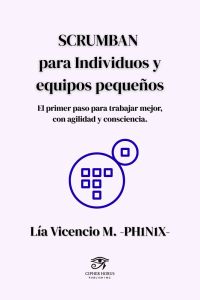
Ya está disponible: SCRUMBAN para individuos y equipos pequeños

Imagen: Cipher Horus Publ1sh1ng

Para mí, cada libro significa cosas distintas y responde a diversas necesidades que con el tiempo he ido detectando en los individuos, los equipos y las organizaciones a las que tengo y he tenido el gusto de ayudar a alinearse.

Y SCRUMBAN para Individuos y Equipos Pequeños es más que un libro, porque es una guía y un mapa visual para ordenar tu mente, avanzar sin prisa y trabajar con claridad.

Este libro lo escribí para todos aquellos que trabajan por su cuenta – como los miles de freelancers que hay – para quienes lideran un equipo pequeño desde una sala de juntas o una mesa de café y que son emprendedores, o que se dedican a las ventas, o que están montando su propia agencia, equipo creativo o de producción por ejemplo y también, para quienes forman parte de una empresa u organización mediana o grande, pero su área o departamento está conformado de pocas personas y están buscando algo que los ayude a encontrar cómo organizarse para trabajar mucho mejor.

Cualquiera que sea el rol que juegas ahora, este libro es para ti, porque te puede ayudar a utilizar una herramienta como SCRUMBAN de una forma muy sencilla y obtener así la visibilidad que necesitas para que tú y/o tu equipo trabajen más tranquilos.

En mi experiencia, tener visibilidad real de lo que estás haciendo, es la mejor manera de tener paz y trabajar con certeza.

Incluye ejercicios vivenciales, ejemplos de la vida real, una guía de implementación en 7 días y acceso a recursos descargables exclusivos.

Aquí empieza otro tipo de productividad.
Una más equilibrada.
Más sostenible.
Más clara.

Porque no hay nada mejor que la Agilidad Consciente y esa, es mi especialidad.

📘 Disponible en Amazon


Lía Vicencio M. -PH1N1X- Escritora y creadora de sistemas y modelos | Autora de ESLOWSBAN® | Fundadora de Becoming Agile

#BecomingAgile #SCRUMBAN #AgilidadConAlma #ProductividadConSentido #TrabajoConsciente

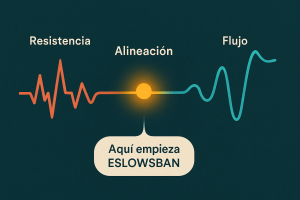
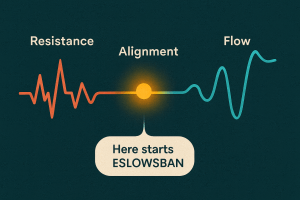
Resistencia no es flojera, es un mensaje de tu energía.

Imagen: Cipher, asistente creativo de Becoming Agile.

¿Te ha pasado que tienes algo en tu lista de pendientes y, aunque sabes que “deberías” hacerlo, sientes un freno interno?
Eso no es pereza. Es tu energía diciendo: “No es momento”.

Cuando hay resistencia, tu energía está fragmentada.
Forzarla es como empujar un río contra su corriente: desgasta y los resultados rara vez son óptimos.

Claves para reconocer y manejar la resistencia:

  1. Pausa y escucha. Haz un alto y pregúntate: ¿Quiero hacerlo?
  2. Identifica el momento. Si la respuesta es “sí, pero no ahora”, respétalo.
  3. Libérate del “tengo que”. Cambia el enfoque a “elijo hacerlo cuando esté alineado”.
  4. Observa tu patrón. Si fluyes con tu energía, la alineación puede tomar minutos u horas. Si no, quizá días… y eso también está bien.

En ESLOWSBAN® te enseño a trabajar con tu energía, no contra ella.

Y el primer paso es saber dónde estás hoy y cómo tu ritmo interno impacta en tus resultados.
Descarga el Autodiagnóstico ESLOWSBAN® (es gratuito) y descubre en qué punto estás y qué ajustes te ayudarán a fluir sin romperte.

Porque productividad no es correr más rápido, sino moverte cuando la corriente te impulsa.

Lía Vicencio M. -PH1N1X- Escritora y creadora de sistemas y modelos | Autora de ESLOWSBAN® | Fundadora de Becoming Agile


Resistance isn’t laziness — it’s a message from your energy.

Image: Cipher, creative assistant at Becoming Agile.

Have you ever had something on your to-do list and, even though you know you “should” do it, you feel an inner brake?
That’s not laziness. It’s your energy saying: “Not now.”

When there’s resistance, your energy is fragmented.
Forcing it is like pushing a river against its current: it’s exhausting, and the results are rarely optimal.

Keys to recognizing and managing resistance:

  • Pause and listen. Stop and ask yourself: Do I want to do it?
  • Identify the right moment. If the answer is “yes, but not now,” respect that.
  • Let go of “I have to.” Shift your mindset to “I choose to do it when I’m aligned.”
  • Observe your pattern. If you’re used to flowing with your energy, alignment may take minutes or hours. If not, it may take days… and that’s okay too.

In ESLOWSBAN®, I teach you to work with your energy, not against it.

And the first step is knowing where you are today and how your internal rhythm impacts your results.
Download the ESLOWSBAN® Self-Assessment (it’s free) and discover where you stand and what adjustments will help you flow without breaking.

Because productivity isn’t about running faster — it’s about moving when the current carries you.

Lía Vicencio M. – PH1N1X – Writer and creator of systems and models | Author of ESLOWSBAN® | Founder of Becoming Agile

Recuerda quién eres.

Imagen: Pixabay

A veces, cuando nos preguntan “¿A qué te dedicas?”, la respuesta sale casi automática y he observado que en estas conversaciones, las respuestas suelen ir a dos extremos:

  • La que suena lo suficientemente compleja e importante como para impresionar.
  • O la que “menosprecia” la propia actividad, como si hubiera que justificarse o restarle valor.

No es casualidad: desde pequeños nos han enseñado a definirnos por lo que hacemos, no por lo que somos.

Sin embargo, en el fondo, ambas respuestas comparten algo: la necesidad de validar nuestra existencia a través de un título, un cargo, un proyecto o un rol.
Como si la vida fuera una competencia silenciosa donde cada uno trata de “ganar puntos” en el ranking de quién es más útil, más exitoso o más interesante.

Pero para mí, la vida no es eso.

Tu profesión, tu negocio, tu puesto en la empresa, tu papel en la familia o en tu comunidad… son  manifestaciones externas de algo mucho más profundo.
Son “trajes” que te pones para transitar ciertas experiencias, pero ninguno de ellos es tu piel real.

Porque yo creo que tú no eres tu trabajo.
Tú no eres tu rol social.
Tú no eres el papel que desempeñas para otros.

¡Eres mucho más que esos títulos!
Eres la conciencia que habita cada experiencia.
Eres el alma que decide las pautas, incluso antes de que llegues a la oficina, a una reunión, a dar una clase o a sentarte en la mesa familiar.

Cuando olvidas esto, empiezas a medir tu valor en función de métricas externas:

  • Cuánto ganas.
  • Qué tan importante es tu cargo.
  • Qué tan ocupada o productiva es tu agenda
  • Cuánto reconocen los demás lo que haces.

Y ahí empieza el desgaste. Porque si tu valor depende de “algo” que está fuera de ti, siempre estará en riesgo o parecerá “poco”.

En cambio, cuando recuerdas que tu esencia no está atada a ninguna etiqueta, algo cambia.
Tu trabajo deja de ser una jaula o un trofeo y se convierte en una herramienta para expresar quién eres.
Tu rol familiar deja de ser una obligación o una medalla y se transforma en un canal para dar y recibir amor y para compartir tu experiencia de la vida con los que te rodean. 

Tu presencia deja de ser un “puesto” y pasa a ser una energía que transforma los lugares donde estás y a las personas con las que colaboras.

Ser consciente de esto es un acto de libertad.
Es volver a poner el alma – tu alma- en el centro y dejar que lo demás orbite a su alrededor.La próxima vez que te pregunten “¿A qué te dedicas?” Anímate a responder desde tu alma.
No para explicar tu cargo o tu actividad, sino para honrar la verdad de quién eres, de tu propósito en esta vida y de lo que te mueve y te hace feliz.
Porque el día que dejas de definirte a partir de lo que haces, empiezas a vivir realmente desde quién eres.

Lía Vicencio M. -PH1N1X- Escritora y creadora de sistemas y modelos | Autora de ESLOWSBAN® | Fundadora de Becoming Agile


Remember Who You Are

Imagen: Pixabay

Sometimes, when people ask us, “What do you do?”, the answer comes out almost automatically. And I’ve noticed that, in these conversations, the answers often go to two extremes:

  • The one that sounds complex and important enough to impress.
  • Or the one that “downplays” the activity, as if trying to justify it or diminish its value.

It’s no coincidence: since childhood, we’ve been taught to define ourselves by what we do, not by who we are.

Yet deep down, both answers share something in common: the need to validate our existence through a title, a position, a project, or a role.
As if life were a silent competition where everyone is trying to “score points” in the ranking of who is more useful, more successful, or more interesting.

But to me, life isn’t that.

Your profession, your business, your job title, your role in the family or in your community… are external manifestations of something much deeper.
They are “costumes” you wear to go through certain experiences, but none of them is your real skin.

Because I believe you are not your job.
You are not your social role.
You are not the part you play for others.

You are so much more than those titles.
You are the awareness that inhabits every experience.
You are the soul that sets the tone—even before you walk into the office, step into a meeting, teach a class, or sit at the family table.

When you forget this, you start measuring your worth by external metrics:

  • How much you earn.
  • How important your position is.
  • How busy or productive your schedule is.
  • How much recognition you receive from others.

And that’s where the drain begins. Because if your worth depends on something outside of you, it will always be at risk—or feel “not enough.”

On the other hand, when you remember that your essence is not tied to any label, something changes.
Your work stops being a cage or a trophy and becomes a tool to express who you are.
Your family role stops being an obligation or a medal and becomes a channel to give and receive love, and to share your life experience with those around you.
Your presence stops being a “position” and becomes an energy that transforms the places you are in and the people you collaborate with.

Becoming aware of this is an act of freedom.
It’s putting the soul—your soul—back at the center, and letting everything else orbit around it.

The next time someone asks you, “What do you do?”, dare to answer from your soul.
Not to explain your title or your activity, but to honor the truth of who you are, your purpose in this life, and what moves you and makes you happy.

Because the day you stop defining yourself by what you do, you begin to truly live from who you are.

Lía Vicencio M. –PH1N1X– Writer and Creator of Systems and Models | Author of ESLOWSBAN® | Founder of Becoming Agile