Reconocer el apoyo: el verdadero punto de partida

Imagen: Pixabay

El apoyo tiene muchas formas de hacerse presente.
No siempre llega como aplausos, likes o grandes gestos visibles.
A veces llega como tiempo.
O como paciencia.
O como alguien que sostiene mientras tú avanzas.

En los equipos —y en la vida— el problema no suele ser la falta de apoyo.
Suele ser la incapacidad de reconocerlo.

El pensamiento humano promedio, en modo automático, opera como rueda de hámster:
Solo ve lo que falta.
No hay suficiente dinero.
No hay oportunidades.
No hay trabajo.
No hay tiempo.

Desde ahí, todo se vive como carencia… incluso cuando hay colaboración constante alrededor.

No se ve el apoyo de la pareja que sostiene económicamente mientras el otro redefine su camino.
No se ve el apoyo del compañero que cubre una tarea para que alguien más pueda ir a una entrevista.
No se ve el apoyo de quien cuida, gestiona, espera o confía.

Y sin embargo, ese sí es el trabajo en equipo.

Reconocer el apoyo no es un gesto emocional.
Es una habilidad operativa.

Cuando reconoces el apoyo:

  • dejas de sentirte solo,
  • tomas mejores decisiones,
  • avanzas con menos fricción,
  • y puedes evaluar con claridad si continuar, ajustar o cambiar el rumbo.

Vivimos en un mundo de colaboración permanente, aunque no siempre consciente.
La tecnología nos apoya.
La infraestructura nos apoya.
Las personas nos apoyan, incluso sin discursos épicos.

Pero hay un punto clave que casi nadie mira:

Así como otros ven lo mejor de ti y te apoyan desde ahí,
también es tu responsabilidad reconocerte y apoyarte a ti mismo.

La agilidad real no empieza cuando haces más.
Empieza cuando ves con claridad lo que ya está sosteniéndote.

Y desde ahí… decides mejor.

PH1N1X


Recognizing support: the true starting point

Image: Pixabay

Support takes many forms.

It doesn’t always come as applause, likes, or grand, visible gestures.

Sometimes it comes as time.

Or as patience.

Or as someone who holds your back while you move forward.

In teams—and in life—the problem isn’t usually a lack of support.
It’s usually the inability to recognize it.

The average person, on autopilot, operates like a hamster wheel: It only sees what’s missing.
Not enough money.
No opportunities.
No work.
No time.

From that perspective, everything is experienced as lacking… even when there’s constant collaboration around.

You don’t see the support of the partner who provides financial support while the other redefines their path.
You don’t see the support of the colleague who covers a task so someone else can go to an interview.
You don’t see the support of the person who cares, manages, waits, or trusts.

And yet, that is what teamwork truly is.

Recognizing support isn’t an emotional gesture.

It’s an operational skill.

When you recognize support:

you stop feeling alone,

you make better decisions,

you move forward with less friction,

and you can clearly assess whether to continue, adjust, or change course.

We live in a world of constant, though not always conscious, collaboration.

Technology supports us.
Infrastructure supports us.
People support us, even without grand pronouncements.

But there’s a key point that almost no one considers:

Just as others see the best in you and support you from that place,
it’s also your responsibility to recognize and support yourself.

True agility doesn’t begin when you do more.

It begins when you clearly see what’s already supporting you.

And from there… you make better decisions.

PH1N1X

No todo depende de que tú puedas más.

Imagen: Pixabay

Hay momentos en los que creemos que,
si las cosas no mejoran,
es porque nos falta aguantar o «hacer» un poco más.

Ser más fuertes.
Más positiv@s.
Más alinead@s.
Más resilientes.

Pero hay una verdad incómoda y liberadora:

No todo depende de que tú puedas más.

A veces ya estás haciendo muchísimo:

Sosteniéndote sin romperte

Manteniendo la calma en medio del temporal

Cuidando tu energía para poder seguir creando

Eligiendo no colapsar

Hablando con honestidad para construir equipo

Avanzando, aunque el entorno esté denso

Eso ya es trabajo.
Eso ya es liderazgo.
Eso ya es agilidad con alma.

La agilidad no es exprimirte.
Es adaptarte sin perderte.

No siempre se trata de hacer más.
A veces se trata de dejar de cargar lo que no te corresponde
para poder seguir avanzando con claridad.

Porque sostenerte
también cuenta.

Y mucho.

PH1N1X


Image: Pixabay

Not everything depends on you being able to do more

There are moments when we believe that
if things aren’t improving,
it’s because we’re not pushing ourselves enough.

Being stronger.
More positive.
More aligned.
More resilient.

But there is an uncomfortable — and liberating — truth:

Not everything depends on you being able to do more.

Sometimes, you are already doing so much:

Holding yourself together without breaking

Staying calm in the middle of the storm

Protecting your energy so you can keep creating

Choosing not to collapse

Speaking honestly to build real teamwork

Moving forward, even when the environment feels heavy

That is work.
That is leadership.
That is agility with soul.

Agility is not about squeezing yourself dry.
It’s about adapting without losing yourself.

It’s not always about doing more.
Sometimes it’s about stopping carrying
what was never yours to hold
so you can keep moving forward with clarity.

Because sustaining yourself
also counts.

And a lot.

PH1N1X

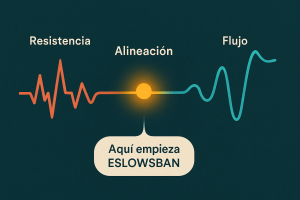
Resistencia no es flojera, es un mensaje de tu energía.

Imagen: Cipher, asistente creativo de Becoming Agile.

¿Te ha pasado que tienes algo en tu lista de pendientes y, aunque sabes que “deberías” hacerlo, sientes un freno interno?
Eso no es pereza. Es tu energía diciendo: “No es momento”.

Cuando hay resistencia, tu energía está fragmentada.
Forzarla es como empujar un río contra su corriente: desgasta y los resultados rara vez son óptimos.

Claves para reconocer y manejar la resistencia:

  1. Pausa y escucha. Haz un alto y pregúntate: ¿Quiero hacerlo?
  2. Identifica el momento. Si la respuesta es “sí, pero no ahora”, respétalo.
  3. Libérate del “tengo que”. Cambia el enfoque a “elijo hacerlo cuando esté alineado”.
  4. Observa tu patrón. Si fluyes con tu energía, la alineación puede tomar minutos u horas. Si no, quizá días… y eso también está bien.

En ESLOWSBAN® te enseño a trabajar con tu energía, no contra ella.

Y el primer paso es saber dónde estás hoy y cómo tu ritmo interno impacta en tus resultados.
Descarga el Autodiagnóstico ESLOWSBAN® (es gratuito) y descubre en qué punto estás y qué ajustes te ayudarán a fluir sin romperte.

Porque productividad no es correr más rápido, sino moverte cuando la corriente te impulsa.

Lía Vicencio M. -PH1N1X- Escritora y creadora de sistemas y modelos | Autora de ESLOWSBAN® | Fundadora de Becoming Agile


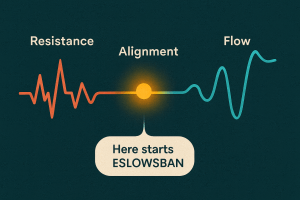
Resistance isn’t laziness — it’s a message from your energy.

Image: Cipher, creative assistant at Becoming Agile.

Have you ever had something on your to-do list and, even though you know you “should” do it, you feel an inner brake?
That’s not laziness. It’s your energy saying: “Not now.”

When there’s resistance, your energy is fragmented.
Forcing it is like pushing a river against its current: it’s exhausting, and the results are rarely optimal.

Keys to recognizing and managing resistance:

  • Pause and listen. Stop and ask yourself: Do I want to do it?
  • Identify the right moment. If the answer is “yes, but not now,” respect that.
  • Let go of “I have to.” Shift your mindset to “I choose to do it when I’m aligned.”
  • Observe your pattern. If you’re used to flowing with your energy, alignment may take minutes or hours. If not, it may take days… and that’s okay too.

In ESLOWSBAN®, I teach you to work with your energy, not against it.

And the first step is knowing where you are today and how your internal rhythm impacts your results.
Download the ESLOWSBAN® Self-Assessment (it’s free) and discover where you stand and what adjustments will help you flow without breaking.

Because productivity isn’t about running faster — it’s about moving when the current carries you.

Lía Vicencio M. – PH1N1X – Writer and creator of systems and models | Author of ESLOWSBAN® | Founder of Becoming Agile

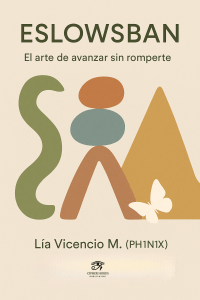
🌿 ESLOWSBANᴹᴿ

El arte de avanzar sin romperte

¿Y si la productividad no fuera correr más?
¿Y si avanzar no tuviera que doler?

ESLOWSBANᴹᴿ no es teoría.
Es un sistema de vida que nació en medio del caos y se convirtió en guía para líderes, docentes y equipos que eligieron rediseñar su forma de trabajar… sin perderse en el intento.

Desde el Esencialismo hasta la Visibilidad con alma, este libro te ofrece pasos reales, humanos y sostenibles para crear una vida con claridad, ritmo y propósito.

Disponible ya en Amazon

Lía Vicencio M. -PH1N1X- Escritora y creadora de sistemas y modelos | Autora de ESLOWSBAN® | Fundadora de Becoming Agile